CNN
Earlier DLSS models used convolutional neural networks to analyze local image regions and track their changes across frames.
NVIDIA sourceChoose DLSS versions and presets for each supported game from Ammonis, with controller-friendly settings for Super Resolution, Frame Generation, and Ray Reconstruction
Free onMicrosoft StoreStore didn't open? Open in browser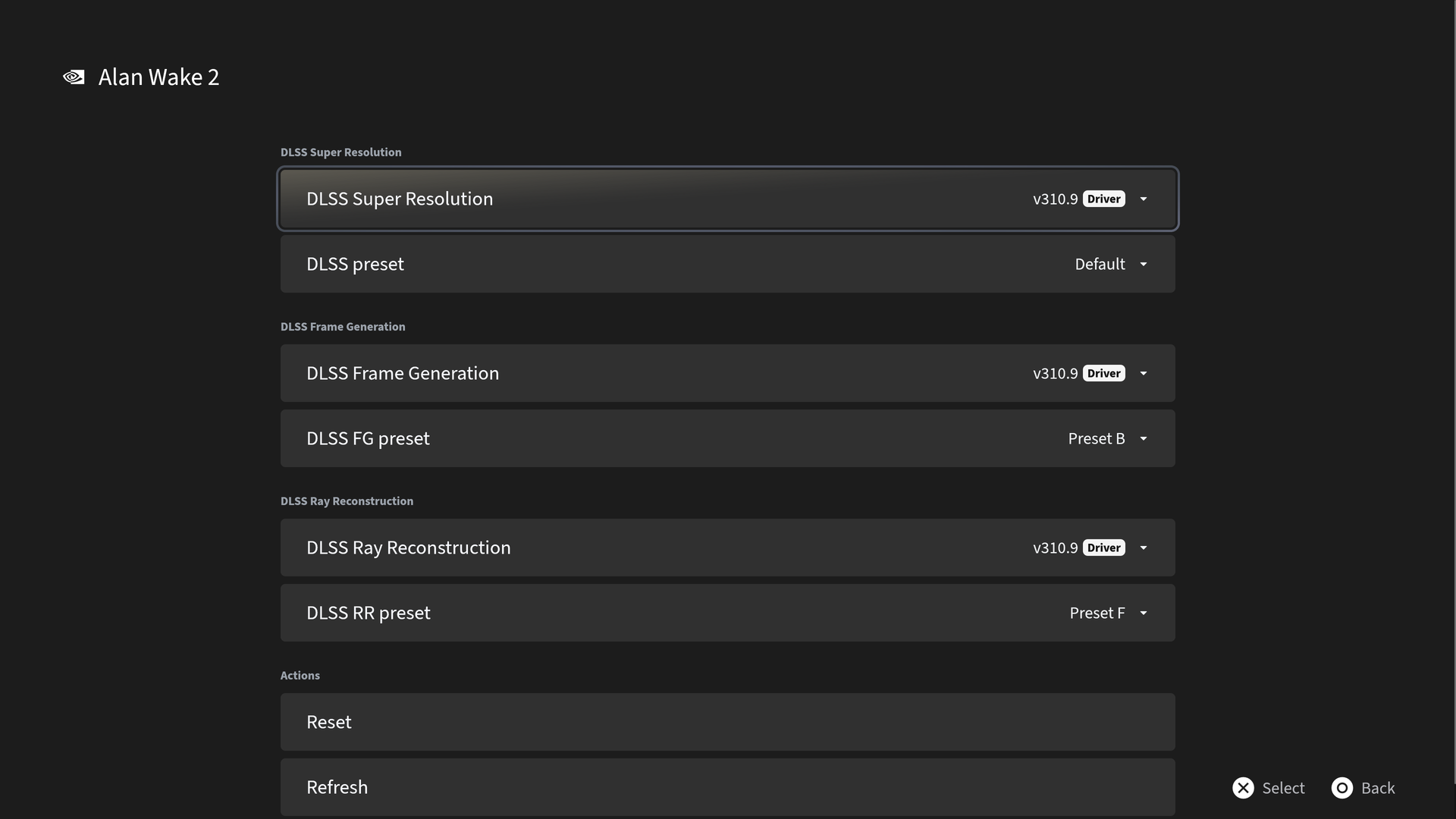
DLSS stands for Deep Learning Super Sampling. It began as a way to render fewer pixels and reconstruct a higher-resolution image with AI. It has since grown into a family of neural rendering technologies for image reconstruction, frame generation, and lighting, running on the Tensor Cores in GeForce RTX GPUs.
NVIDIA source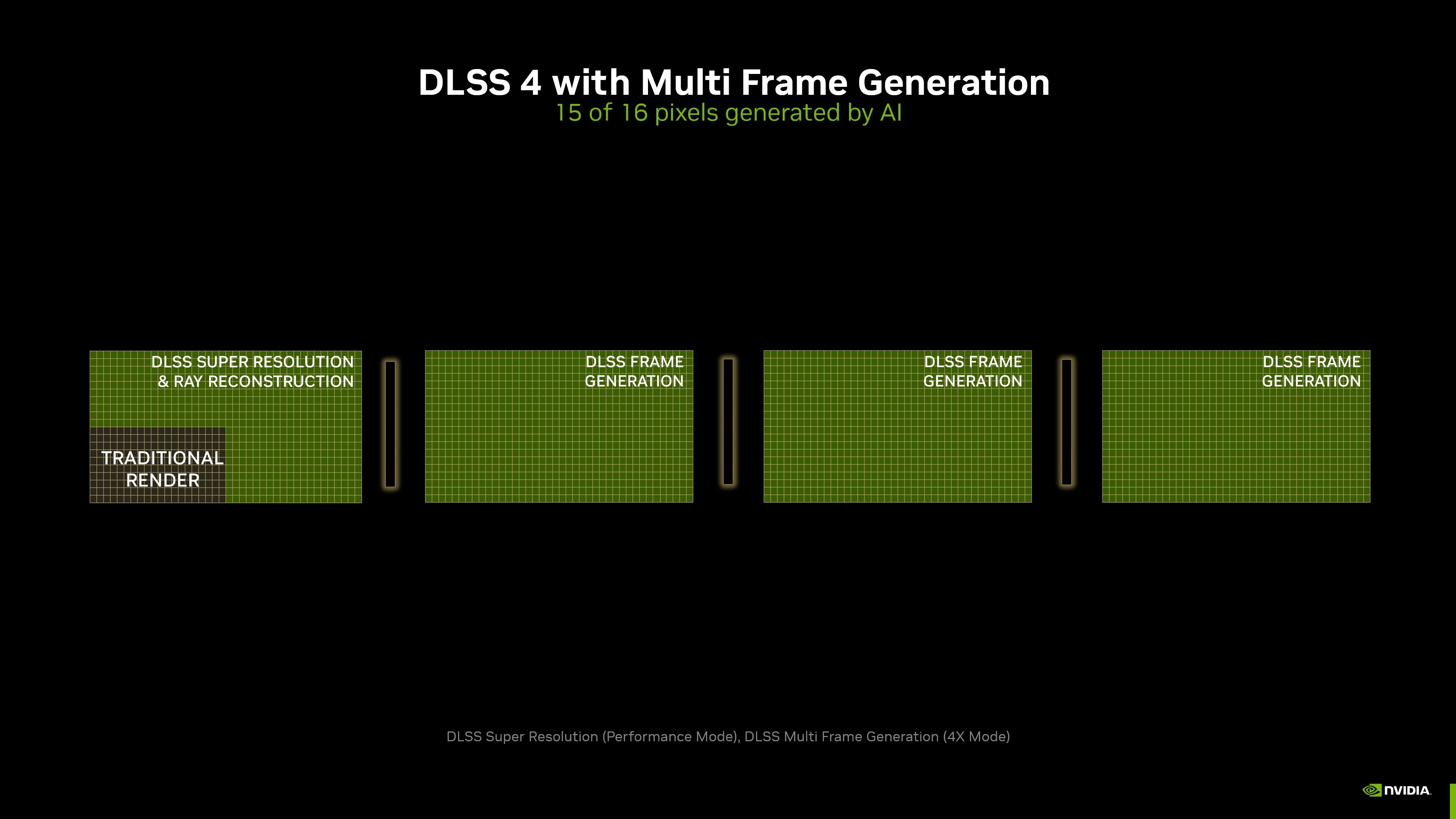
The model determines how DLSS reconstructs the image. A preset selects a model and its tuning; the in-game Quality, Balanced, and Performance modes set the rendering resolution.
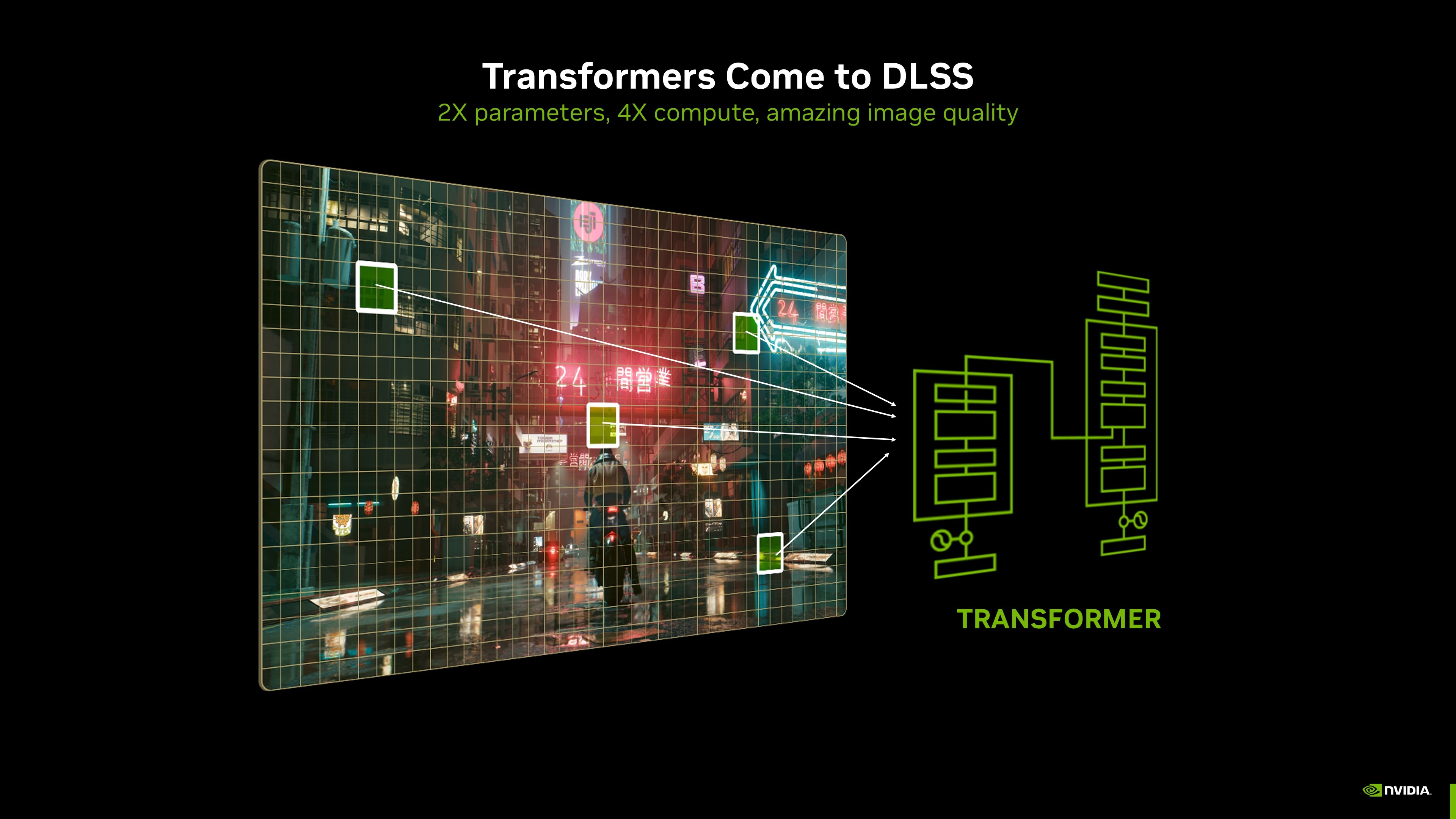
Earlier DLSS models used convolutional neural networks to analyze local image regions and track their changes across frames.
NVIDIA sourceIntroduced with DLSS 4, attention across the full image and multiple frames improves fine detail, reduces ghosting, and steadies edges in motion.
NVIDIA sourceDLSS 4.5 Super Resolution uses more computation and a broader training dataset to improve lighting, anti-aliasing, and motion clarity.
NVIDIA source| Preset | Model and behavior |
|---|---|
| A–F | CNN presets from older DLSS releases. NVIDIA now marks A–D as removed and E/F as deprecated. |
| J | First-generation Transformer. May show less ghosting than K, at the cost of more flickering. |
| K | First-generation Transformer. NVIDIA recommends K for DLAA, Quality, and Balanced modes. |
| L | Second-generation Transformer, optimized for Ultra Performance at 4K. |
| M | Second-generation Transformer, optimized for Performance mode. |
L and M also support Quality, Balanced, and DLAA. Their performance cost is higher on RTX 20/30 GPUs, which lack native FP8 support; K can offer a better balance on these cards.
NVIDIA sourceThe enhanced model uses extra interface data in supported games to improve HUD and mini-map clarity. Available on RTX 40 and 50 Series.
NVIDIA sourceThe second-generation Transformer for Ray Reconstruction improves reconstructed lighting, fine detail, and stability in ray-traced and path-traced scenes.
NVIDIA sourceFrom AI upscaling to neural rendering.
DLSS
Announced with the Turing-based GeForce RTX 20 Series, DLSS introduced AI-assisted image reconstruction powered by Tensor Cores.
NVIDIA sourceDLSS 2.0
A general model replaced per-game training. Temporal feedback improved detail and stability, with Quality, Balanced, and Performance modes.
NVIDIA sourceDLSS 3
AI-generated frames joined Super Resolution, with Reflex to manage latency. The new feature debuted with GeForce RTX 40 Series.
NVIDIA sourceDLSS 3.5
An AI model replaced hand-tuned ray-tracing denoisers, improving reconstructed lighting and detail on all GeForce RTX GPUs.
NVIDIA sourceDLSS 4
Transformer models upgraded Super Resolution, Ray Reconstruction, and DLAA. RTX 50 Series gained up to three generated frames per rendered frame.
NVIDIA sourceDLSS 4.5
A second-generation transformer model improved anti-aliasing and motion stability while reducing ghosting in Super Resolution on GeForce RTX GPUs.
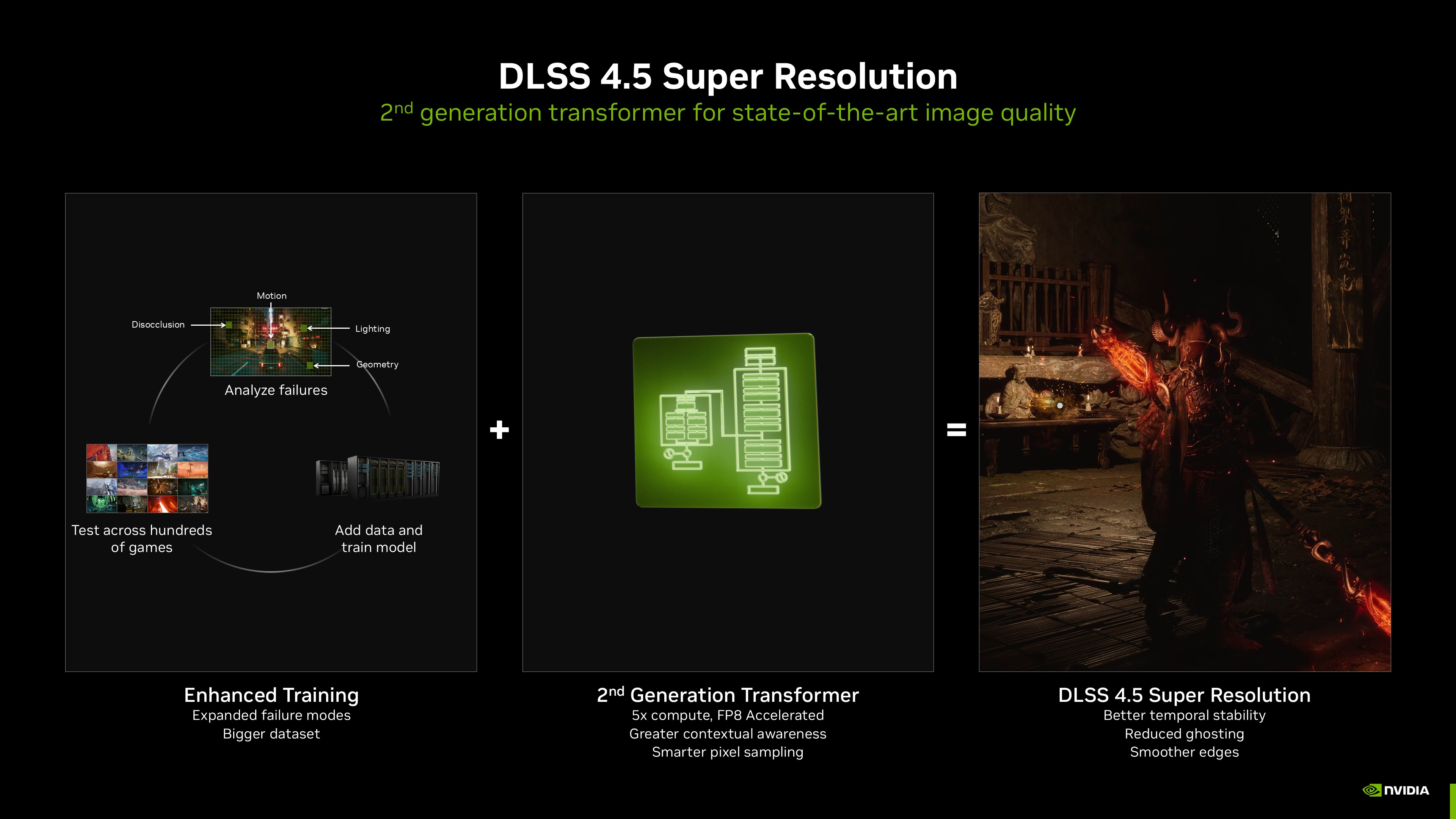
DLSS 4.5
RTX 50 Series gained a dynamic frame-generation multiplier and 6X mode: up to five generated frames for each rendered frame.
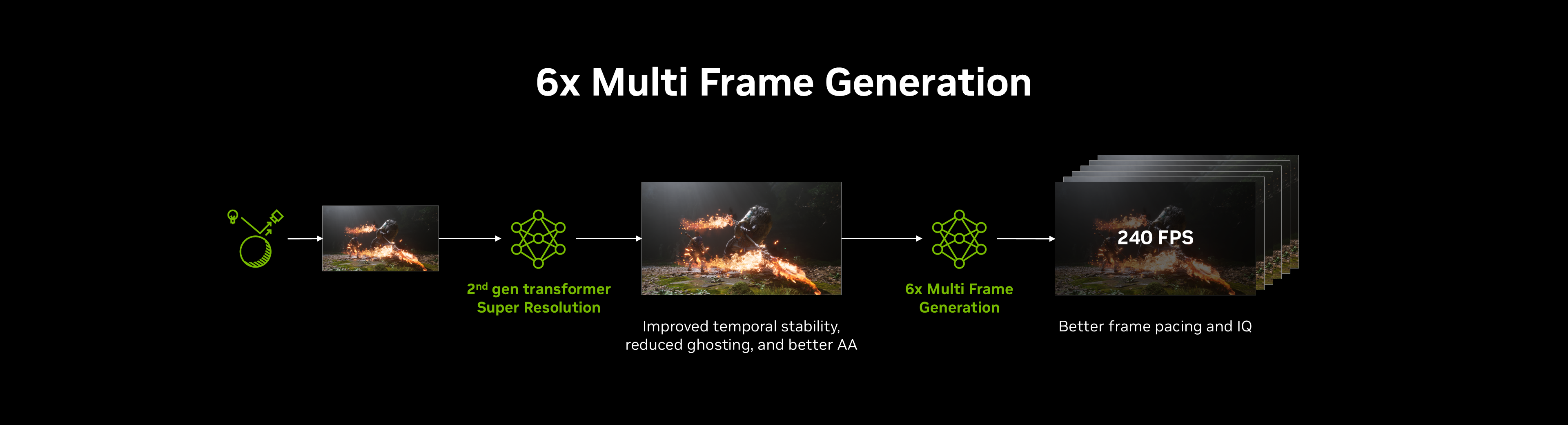
DLSS 4.5
The new transformer model reached NVIDIA app Early Access, improving ray-traced image reconstruction across GeForce RTX generations.
NVIDIA sourceDLSS 5
DLSS 5 debuted in NBA 2K27 on RTX 50 Series, adding AI lighting and materials with artistic controls for developers.
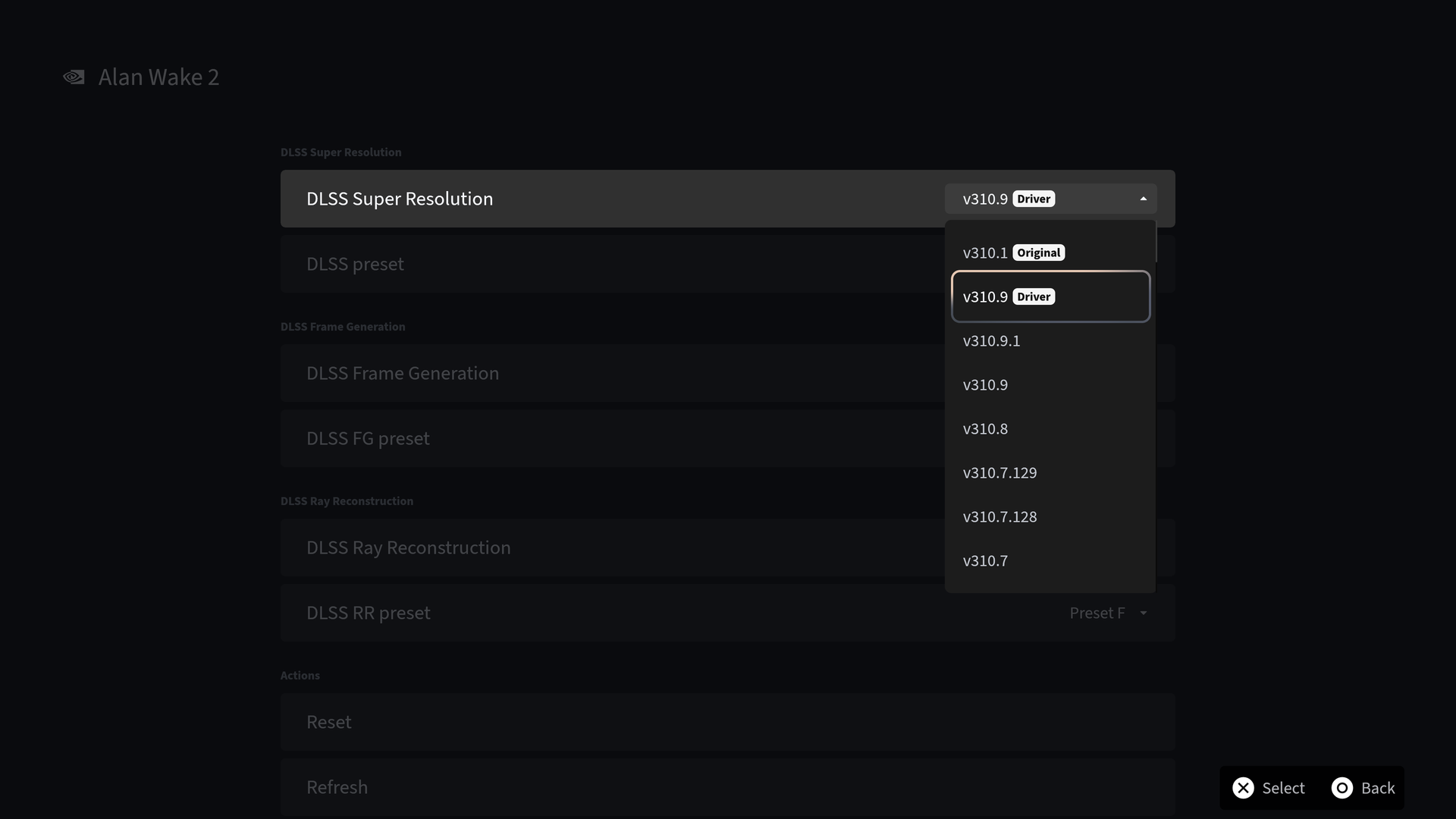
NVIDIA sourceSwitch between available DLSS versions and tune presets for the games you play.
Manage DLSS from the same fullscreen interface you use to browse your library and launch games. Version selection and preset adjustments work with controller navigation, making per-game tuning part of your usual Ammonis experience.
Per-game settings